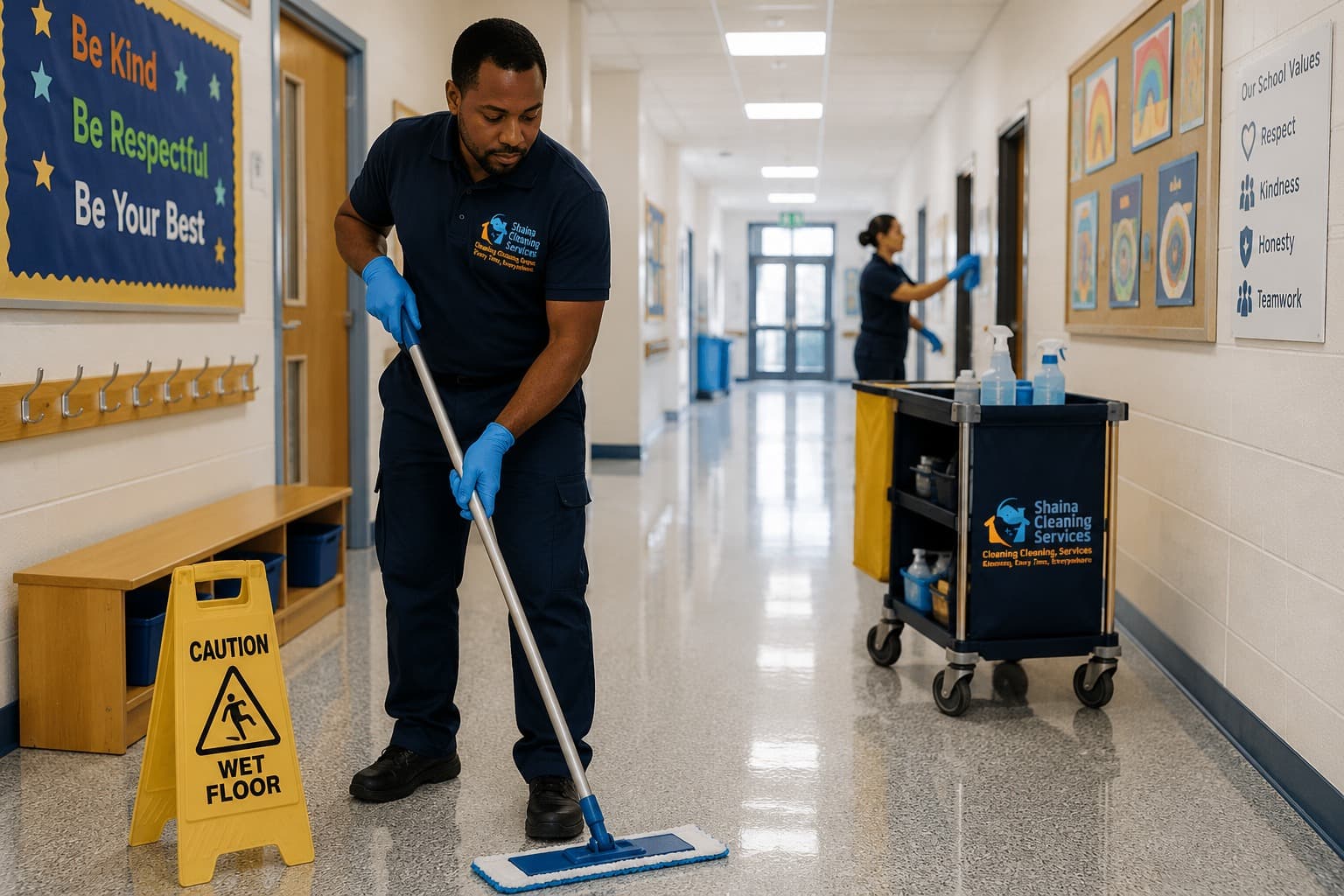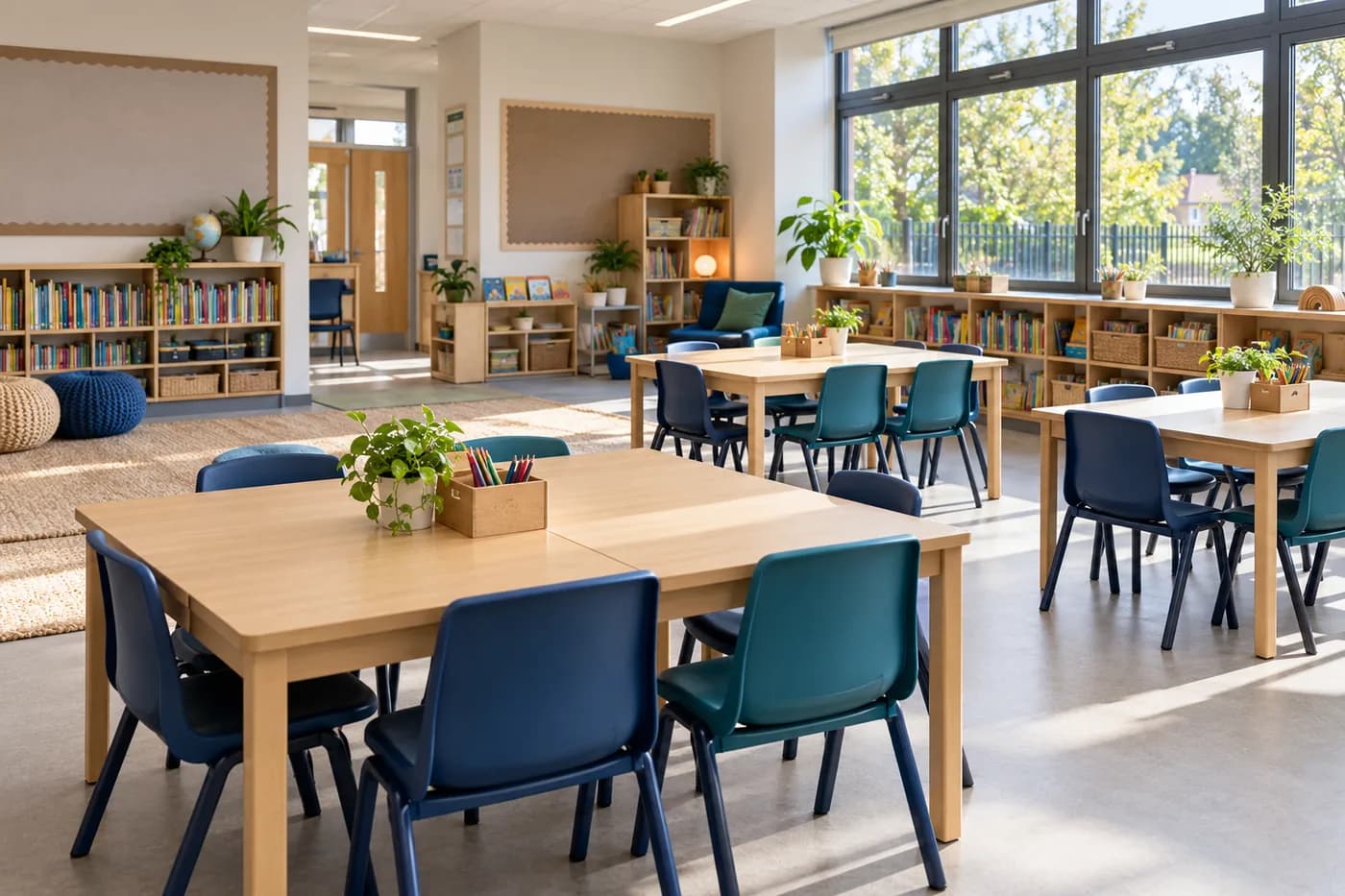
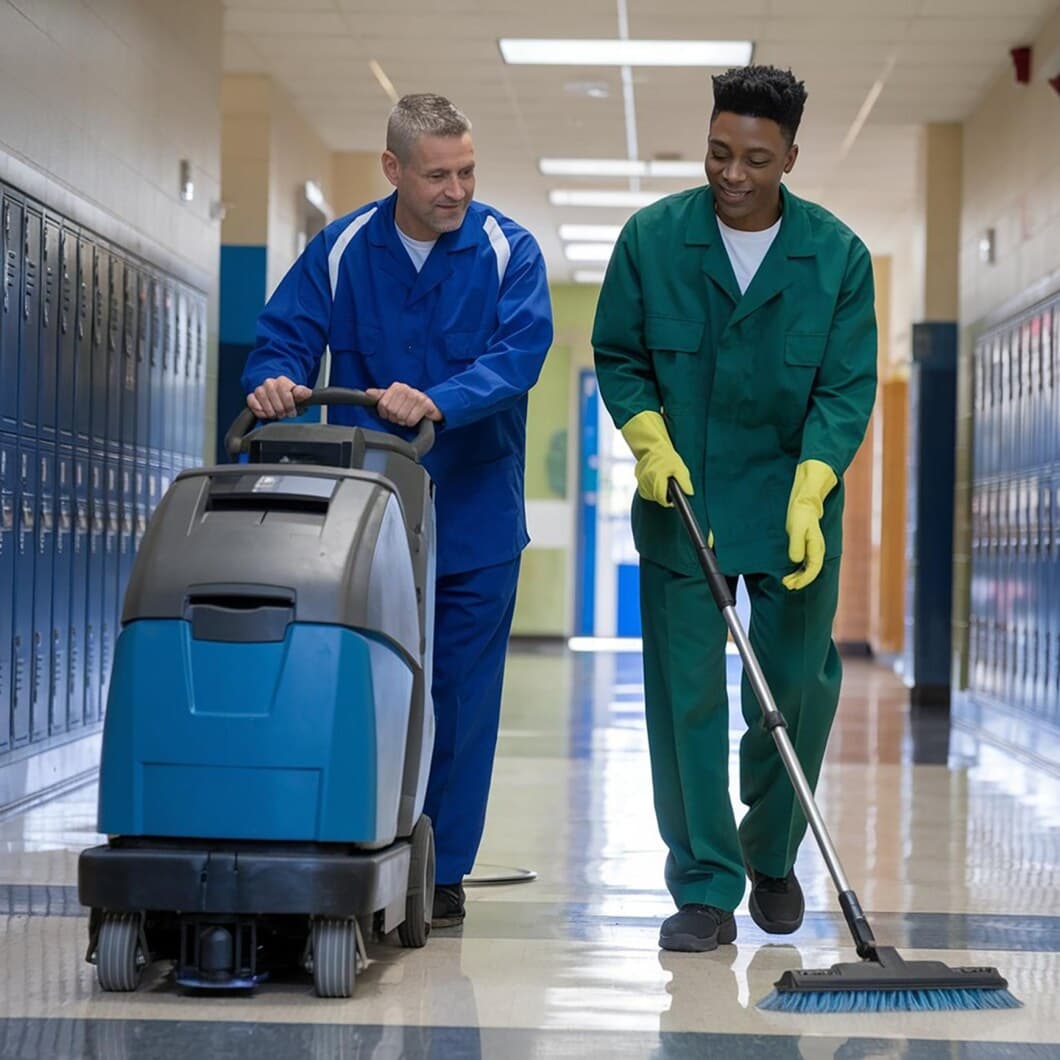
A school cleaning checklist should make responsibilities clear enough for both the school and the provider to use. A list of rooms is a starting point, but it does not explain the tasks, frequency, access or standard expected.
Use the prompts below during a site walk. They are a framework for a discussion, rather than a universal specification: a nursery, secondary school and college will have different needs.
Start with a complete room list
Compare the cleaning schedule with your floor plan. Include teaching rooms, toilets, dining areas, staff spaces, corridors, stairs and any facilities used for lettings. Mark rooms that require restricted access or a separate arrangement.
- Classrooms: desks, agreed touchpoints and floors
- Washrooms: toilets, basins, taps and consumables
- Dining areas: tables, chairs and floors
- Shared spaces: entrances, handrails and stairs
- Staff spaces: offices, kitchens and meeting rooms
- Sports facilities: floors, benches and changing areas
Separate routine and periodic work
Set out the regular tasks separately from work planned for quieter periods. A holiday deep clean should have its own agreed scope, not a vague expectation that everything in the building will be included.
For each task, note who completes it, when access is available and how completion is recorded. Check where catering responsibilities begin and end so that kitchen work is neither omitted nor priced twice.
Check access and safeguarding
Review visitor procedures, keys, alarms, lone working and the arrangements for areas where children may still be present. Ask for the relevant staff-vetting evidence through your usual safeguarding process.
Include the practical details that are easy to miss: who unlocks a sports changing room after a late booking, who secures chemical storage and who receives a report if equipment is damaged.
Agree how standards are reviewed
A review works best when the school and provider use the same specification. Agree who checks the work, how frequently they meet and how a concern is recorded and resolved.
Keep a simple record of changes. If a classroom becomes an intervention room or pupil numbers increase, update the task list and timings instead of relying on an informal conversation.
Sources & further reading
Reviewed 18 October 2026. This is general information for setting leaders; use current official guidance and your setting’s risk assessments.