
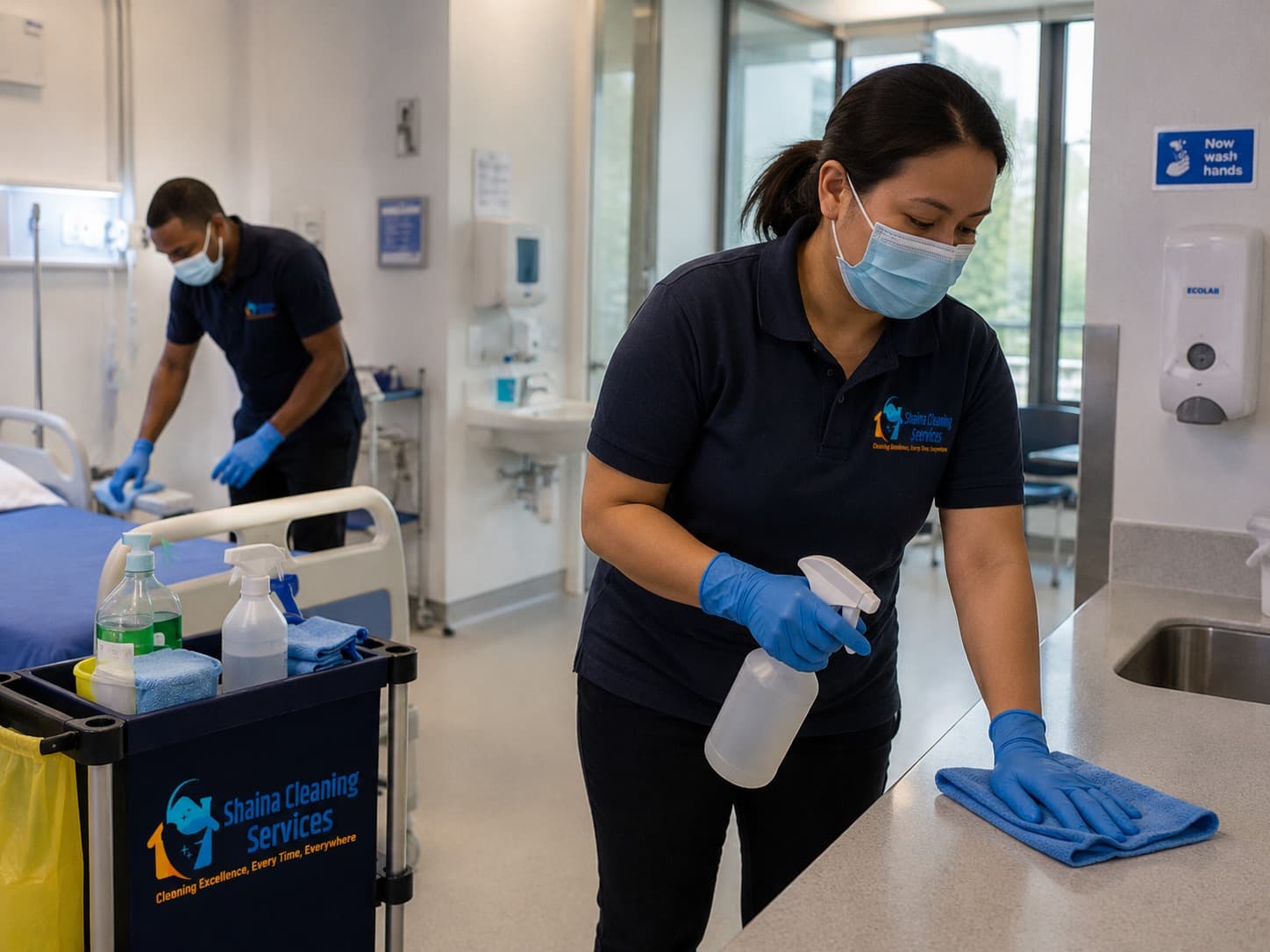
Healthcare & Infection Prevention · Educational guide
Healthcare cleaning is part of providing a safe, well-managed environment for care. A GP surgery or clinic brings together people with different health needs, staff moving between tasks and equipment used throughout the day. Cleaning arrangements need to reflect those activities, rather than simply making the building look presentable.
For practice managers, the useful question is whether the cleaning plan addresses how each space is used. A quiet office, a busy reception desk and a treatment room have different needs. Clear responsibilities and dependable routines help the whole team manage those differences.
Why healthcare environments need particular attention
Patients may attend with symptoms of an infection, while others arrive for routine appointments. Hands, objects and surfaces can become contaminated during everyday activity. Dirt is not always visible, so a quick glance cannot confirm whether a surface has been cleaned appropriately.
The NHS National Infection Prevention and Control Manual provides the wider framework for precautions in care settings. Environmental cleaning sits alongside other measures. It should be planned around patient care, with local infection prevention advice informing methods and any additional precautions.
Protecting patients with greater vulnerability
Some patients have reduced ability to fight infection because of illness or treatment. Others may have wounds or need procedures that make careful hygiene particularly important. Their needs are one reason healthcare premises require more considered arrangements than a general workplace.
Cleaning teams do not need access to individual patient records to do their work. They do need clear instructions about the spaces they enter, when those spaces are available and whether the clinical team has identified additional cleaning requirements. Share relevant operational information while protecting confidentiality.
A useful planning exercise is to follow a patient’s route from the entrance to reception, seating, a consulting room and washroom. This can reveal surfaces used repeatedly and places where responsibility is unclear, especially in buildings shared by several services.
Reducing environmental contamination
Effective cleaning removes dirt and helps remove contamination from surfaces. Appropriate disinfection may also be needed according to the task, local policy and infection risk. Using more chemical is not automatically better: the product must suit the surface, be used correctly and have the required time to work.
High-touch points deserve explicit attention. Door handles, chair arms, reception counters and taps can be overlooked if a schedule focuses mainly on floors and bins. A room-by-room specification makes those smaller tasks visible and easier to check.
Cleaning equipment also needs care. Reusing a contaminated cloth across areas can undermine the work. Agree how cloths and mop heads are changed, processed and stored, and how cleaning moves from cleaner areas towards dirtier areas without returning contamination to finished surfaces.
Supporting staff health and safety
Clinical, reception and cleaning staff all use the premises. Clear cleaning arrangements help staff know which surfaces and equipment are ready for use, what remains their responsibility and how to report concerns. This is especially useful during shift changes and when temporary staff cover an absence.
The NHS healthcare cleanliness health and safety guidance also addresses risks to people carrying out the work. Chemical handling, wet floors and unexpected sharps need task-specific procedures. Staff should know when to stop, secure an area and contact the appropriate trained person.
Practical details matter: suitable storage, reliable access to approved products and enough time to carry out the agreed tasks. Managers should review whether the planned hours match the specification rather than expecting staff to squeeze extra work into an unchanged visit.
Maintaining patient confidence
Patients notice overflowing bins, marked seating and poorly maintained washrooms. A visibly cared-for environment can support confidence in the organisation, particularly when someone is already anxious about an appointment. Prompt responses to cleaning concerns show that feedback is taken seriously.
Appearance is only one part of the assessment. A pleasant smell or polished floor is not proof that infection risks are controlled. Managers need checks of the actual work, including less obvious touchpoints, and a way to address damaged surfaces that are difficult to clean.
Professional cleaning within wider infection prevention
Cleaning alone cannot eliminate infection risks. Hand hygiene, respiratory hygiene, appropriate ventilation, clinical equipment decontamination and risk-based protective measures remain essential parts of the wider arrangements. Clinical decisions and outbreak management belong with the responsible healthcare team.
A professional cleaning contractor can provide an agreed premises-cleaning service, but the boundary with clinical work must be explicit. Do not assume a routine contract includes instrument sterilisation, specialist medical-device decontamination or clinical waste collection.
Use a written handover to identify who cleans shared equipment, who deals with urgent contamination and how missed work is reported. Regular reviews should consider changes such as additional clinics, longer opening hours or a different use of a room.
Planning healthcare cleaning in Sheffield and South Yorkshire
For local practices, useful starting information includes the premises layout, appointment times, room uses and current concerns. These details allow a provider to discuss access, cleaning frequency and how work can fit around patients and staff.
Shaina’s healthcare cleaning services cover premises such as GP surgeries and clinics. Explore existing coverage information for Sheffield and South Yorkshire, then agree the scope for your individual site.
To understand the practical risks behind a cleaning plan, read how infections spread in healthcare settings. Our healthcare cleaning standards guide explains schedules, responsibilities and checks. You can find more educational guides on the resources page.
Further Reading & Official Guidance
NHS England resources
Looking for professional healthcare cleaning in Sheffield or South Yorkshire? Explore Shaina Cleaning's tailored healthcare cleaning services or contact our team to arrange a free site visit.