
Healthcare & Infection Prevention · Educational guide
A waiting room, consulting room or reception desk can be used by many people over the course of a day. Understanding possible routes of infection helps a practice decide where to focus precautions. The aim is to manage risk sensibly, rather than assume that every object or person presents the same hazard.
An infection needs a route by which an infectious agent reaches a susceptible person. That route differs between organisms and situations. Cleaning addresses part of the picture, while clinical assessment and other infection prevention measures address risks that wiping surfaces cannot resolve.
Direct contact and indirect contact
Direct contact involves transfer through contact between people. Indirect contact involves an intermediate object or surface, such as shared equipment. For example, hands may become contaminated during a task and then touch another object. Whether that leads to infection depends on the organism, exposure and person involved.
The NHS National Infection Prevention and Control Manual sets out standard precautions and additional precautions for particular risks. These arrangements should guide practice procedures. Staff should not rely on a patient appearing well before applying routine hygiene measures.
Surfaces and shared equipment
A contaminated surface may contribute to transfer when someone touches it and subsequently touches a susceptible site, another person or equipment. Surface contamination is not the same as an infection, and simply finding germs does not establish where an infection came from.
Consider objects used by successive patients or staff: chair arms, check-in screens, pens and suitable reusable care equipment. Responsibility for decontamination should be agreed before use. Clinical equipment needs methods compatible with its manufacturer’s instructions and the practice’s procedures.
For busy areas, look at how use changes during the day. An evening clean may cover routine premises tasks while some items need attention between uses or following contamination. The clinical lead should help define those boundaries; a general cleaner should not improvise device decontamination.
Respiratory transmission in shared spaces
Some infections can spread through respiratory particles released by an infected person. Exposure may involve close contact or particles in the air, depending on the organism and circumstances. Surface cleaning cannot remove all the risks associated with sharing an indoor space.
Practices therefore need arrangements for recognising symptoms, respiratory hygiene, patient placement and ventilation, with additional protective measures where indicated by current guidance. Reception teams should know the local escalation process when a patient reports potentially infectious symptoms.
Cleaning should support those controls. For a suspected infection, the clinical team should determine precautions and communicate any implications for cleaning access or methods.
High-touch areas: a practical starting point
The table below identifies everyday touchpoints to include in a local assessment. It is a planning aid, not a universal timetable. Frequency and method should reflect use, contamination, surface compatibility and the practice’s approved policy.
| Touchpoint | Cleaning considerations |
|---|---|
| Door handles and push plates | Include frequently used entrances and internal doors; agree a risk-based frequency and a compatible product. |
| Waiting-room chair arms and check-in screens | Consider patient turnover; follow screen manufacturer instructions and address visible contamination promptly. |
| Reception counters and shared pens | Clarify which surfaces and objects each team cleans; protect paperwork and electronic equipment. |
| Washroom taps, flush controls and dispensers | Use designated equipment and the approved sanitary-area procedure; check consumable supplies. |
| Shared non-invasive care equipment | Agree trained responsibility and decontamination between patients in accordance with device instructions and local policy. |
Cross-contamination through cleaning equipment
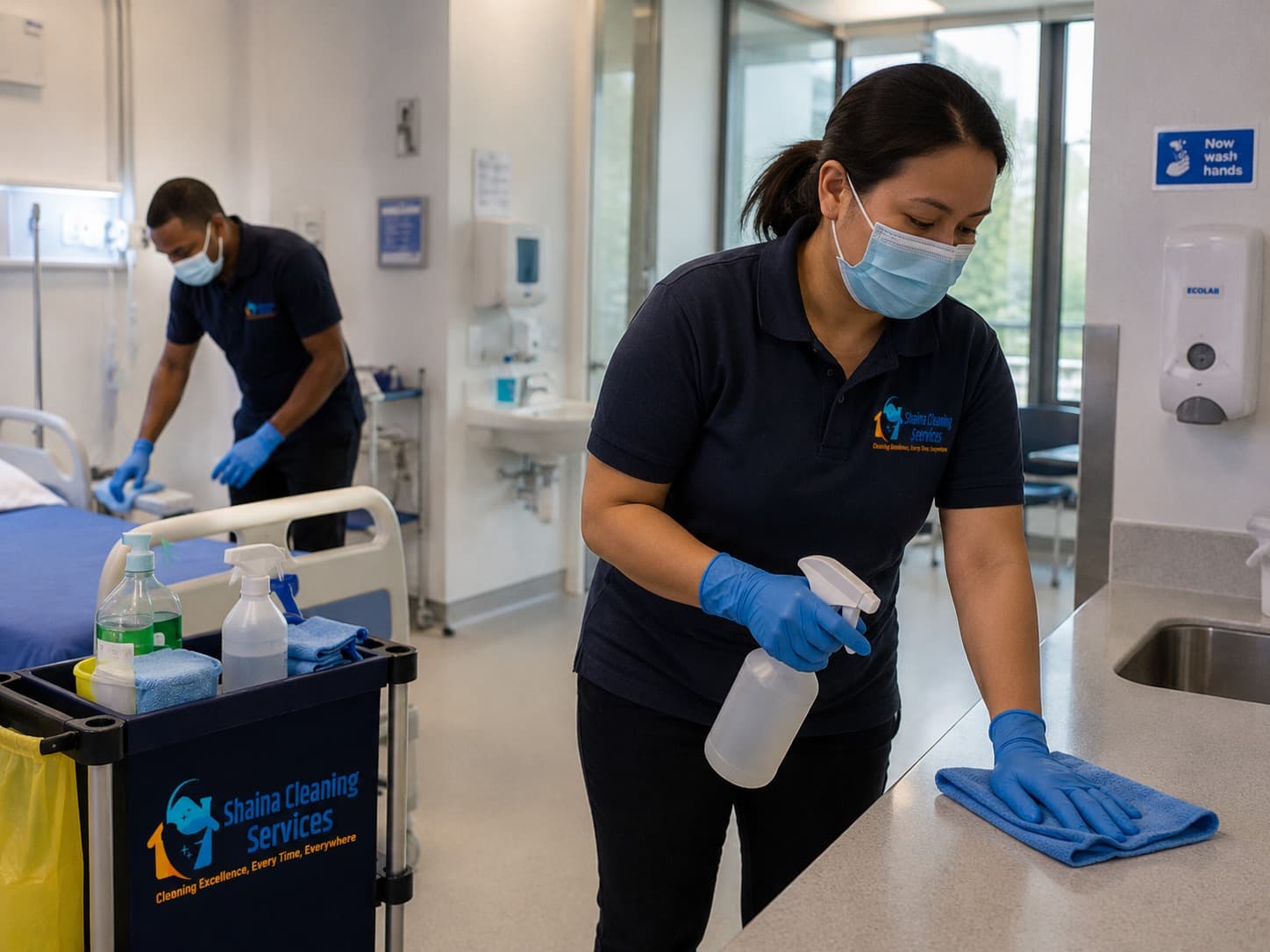
Cleaning can move contamination if tools and working methods are poorly managed. A cloth used in a washroom should not then be used at reception. Dirty solution, poorly stored mop heads or an overloaded trolley can also undermine separation between tasks.
Use the site’s agreed equipment separation or colour-coding system, change cloths and solutions as required, and follow a planned sequence. Keep clean supplies separate from used materials. Equipment should be cleaned or processed as appropriate and stored in a condition suitable for its next use.
Hand hygiene and environmental cleaning work together
Clean surfaces can be recontaminated during normal use. Equally, clean hands may become contaminated through contact with an unclean item. This explains why environmental cleaning and hand hygiene need to work together across the patient journey.
NHS standard infection control precautions include hand hygiene and safe management of the care environment. Staff should follow the relevant indications and technique in local policy. Gloves do not replace hand hygiene, and staff need suitable facilities and supplies to follow the procedure consistently.
Practical measures for reducing risks
Begin with clear responsibilities rather than buying a stronger product. Identify touchpoints, specify approved methods and decide who responds when a surface is visibly contaminated between scheduled visits. Agree an escalation contact for incidents requiring clinical advice.
Keep surfaces accessible, address damaged finishes and check that staff can find the current schedule. Review records when tasks are missed and make sure corrective work is completed. Plan cleaning around room availability so required product contact times can be achieved.
Cleaning alone cannot eliminate infection risks. It supports a broader system that includes hand hygiene, respiratory precautions, ventilation and appropriate clinical procedures. No cleaning contract should be treated as a guarantee that infections will not occur.
Read why healthcare cleaning matters and the practical healthcare cleaning standards guide for related planning advice. Shaina’s healthcare cleaning service explains premises-cleaning support, and our resources page brings the guides together.
Further Reading & Official Guidance
NHS England resources
Looking for professional healthcare cleaning in Sheffield or South Yorkshire? Explore Shaina Cleaning's tailored healthcare cleaning services or contact our team to arrange a free site visit.